China’s Rural Reform: A History Not Designed but Discovered
Deep Dives
Explore related topics with these Wikipedia articles, rewritten for enjoyable reading:
-
People's commune
11 min read
The article centers on the dismantling of the People's Commune system - understanding its origins, structure, and Maoist ideology would provide essential context for appreciating why its collapse was so unexpected and significant
-
Household responsibility system
12 min read
This is the specific reform that emerged 'accidentally' to replace the communes - readers would benefit from understanding exactly how this system worked and why it proved so effective at transforming Chinese agriculture
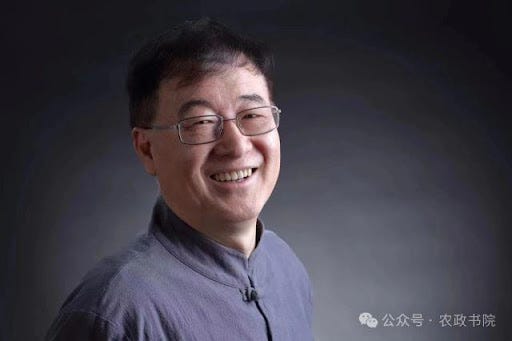
Zhao Shukai (赵树凯; b. 1959) is a Chinese official of rural policy and governance. From 1982 to 1989, he worked at the Rural Policy Research Office of the Communist Party of China Central Committee’s Secretariat (later reorganised as the State Council’s Rural Development Research Centre and subsequently the Research Centre of Rural Economy under the Ministry of Agriculture and Rural Affairs). Starting in 1990, he served at the Development Research Centre of the State Council, China’s government cabinet, holding roles including Director General of the Rural Department’s Organisation Research Office and Director General of the Information Centre.
The following article, originally published on 23 November on the WeChat blog 沽河虎山 (likely Zhao’s personal WeChat blog), offers a candid reflection on the futility of trying to control history from above: what began as a carefully designed collective vision for agricultural reform in the late 1970s quickly morphed into a series of unintended policy “accidents.” The shift from state-controlled communes to household-based farming emerged not from top-level planning, but from local initiatives and grassroots innovation, highlighting that the true agents of change were the farmers, not Beijing’s leaders. Senior leadership’s planning, disconnected from the realities of those affected, ultimately betrayed “a profound lack of respect” for the very people the reforms aimed to serve. —Yuxuan Jia
Zhao agreed to a translation but didn’t review it before publication. - Zichen Wang
赵树凯:“故事”,还是“事故”?
——农村改革史断想(1)
Zhao Shukai: “Design” or “Accident”?
—Reflections on the History of China’s Rural Reform (I)
At the age of eighty-five, Du Runsheng brought together the officials and experts who had helped draft the key policy documents of China’s rural reform, and edited their recollections into a volume titled A Virtual Record of China’s Rural Reform. In the preface, Du wrote: “Rural reform did not begin with a pre-designed blueprint. It was accomplished through the interactions across different levels and in different ways, among farmers, grassroots cadres, local governments, and central leaders.” (p.1. Du Runsheng, ed., A Virtual Record of China’s Rural Reform, Central Party Literature Press, 1999). This makes clear that China’s rural reform was an “unintended outcome.”
This brought to mind something I often heard Du say when I was working at the Central Rural Work Office in the 1980s. When talking about rural reform, he would frequently remark, “You tend flowers with great care, but they refuse to bloom; yet a willow you plant unintentionally grows into
...This excerpt is provided for preview purposes. Full article content is available on the original publication.