Religion, nihilism, faith, and the movies
At the beginning of this year, the Ritz in Randwick ran a retrospective of Andrei Tarkovsky films. I saw Stalker and The Sacrifice for the first time. (I was away at Easter, when they screened Nostalghia, which is a shame, because I’ve never seen that before, either. At least the break gave me time to read Zona, Geoff Dyer’s rather wonderful, inventive book about Stalker.) I saw Andrei Rublev for the second time, and for the first time on the big screen. I walked away from each of these films shaken, by each in different ways.
Two things might help add some context to the rant that follows. The first is that I went to film school. I hold that most useless of things, a Bachelor of Film and Television. (I also hold that second most useless of things, a Masters of Journalism. I mean, seriously, you couldn’t make my life choices up.) For the two years I was at university, I watched at least two feature films a day, often more. I started and ran the university’s “film journal,” Cinephilia, and was an active part of the then-marvellous film blogosphere. (Please follow Zach Campbell if you don’t already.) I later moved to Melbourne to undertake my Honours in Cinema Studies, but gave that up on on the grounds that academic film criticism bored me, and, worse, was slowly turning me into a bad writer. (It often seemed to me that people would come in with a theory or school of thought they liked—Marxism, Lacanian psychoanalysis, feminism—and find films that roughly illustrated those beliefs. They did not seem to me to be theorising off the back of the films themselves, the way someone like Nicole Brenez does. This is perhaps an argument for another time.)
The other thing to know is that I was raised Catholic. I’ve been lapsed since I was about ten, chose Felix as my Confirmation name because of the cartoon cat, and haven’t actively taken part in the Mass since I was in Mexico City in 2010 and needed to get my hands on some wine. But I can still perform call-and-response with the best of them, and for some reason followed the recent conclave closely.
That’s the context. Your mileage on the rest of this piece may vary.
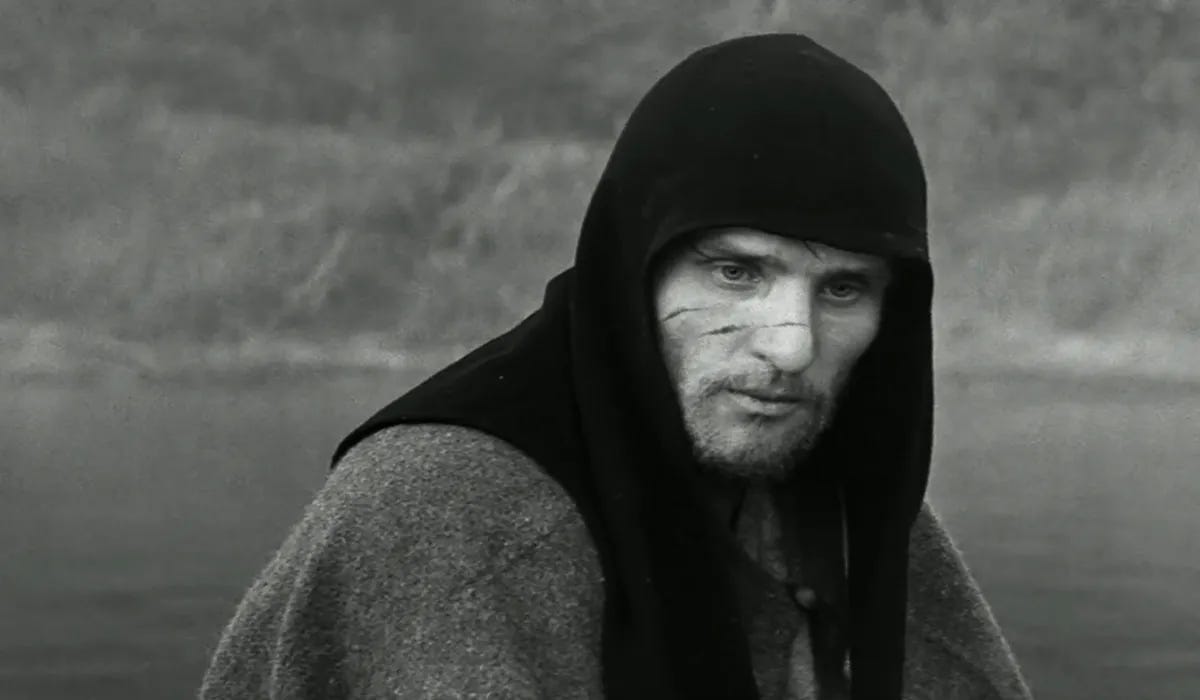
Rublev is a young man’s film. I don’t think I understood
...This excerpt is provided for preview purposes. Full article content is available on the original publication.