What Canada Gets Wrong in Its Reset with China
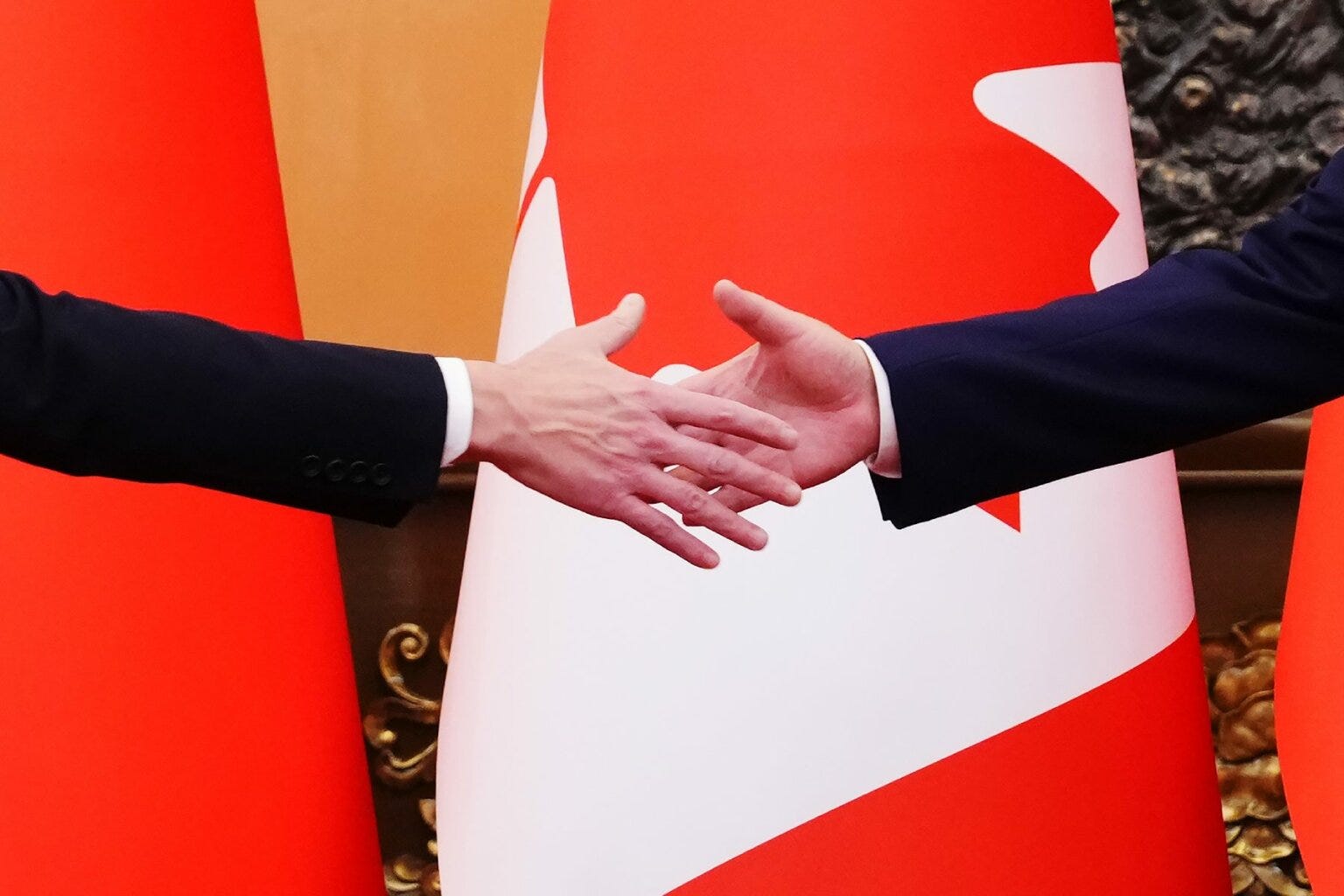
Sean Kilpatrick/Canadian Press
This story was originally published on thewalrus.ca
By Vikram Nijhawan and Dan Wang
During his recent delegation to Beijing—the first by a Canadian prime minister since relations between the two countries became strained in 2018—Mark Carney agreed to allow 49,000 Chinese electric vehicles into the Canadian market at a reduced tariff rate. The move was presented as a pragmatic reset that could draw joint-venture capital back into Canada’s auto corridor and offer relief to an industry squeezed by United States president Donald Trump’s trade war.
With Ottawa attempting to patch its trade relationship with Beijing, it felt like the right moment to speak with Dan Wang.
Wang is a Canadian writer who covers technological, macroeconomic, and geopolitical dynamics between China and the US. His book Breakneck: China’s Quest to Engineer the Future was one of last year’s most talked-about works of nonfiction.
At its core, Breakneck argues that political power in the US is dominated by lawyers, while, in China, it is largely held by engineers—and that these contrasting professional cultures produce profoundly different approaches to industrial policy and trade: regulatory caution and incremental growth on one side, rapid manufacturing scale and infrastructure build-out on the other.
As Canada tests a recalibrated relationship with China, I wanted Wang’s perspective on how a middle power can navigate an era of intensifying great-power rivalry—and what trade deals can realistically achieve. He spoke to me over video call from his home in Palo Alto, California, about all of this and more. The conversation has been lightly edited for length and clarity.
You can’t share stories from thewalrus.ca on Facebook or Instagram because of Meta’s response to the Online News Act, but you can share this Substack article there
To start, I wanted to talk a bit about this concept you popularized: the lawyer/engineer binary. There are people I speak to who have no real investment in great-power competition, but they’ve nonetheless heard about the concept through the ether. It strikes me as kind of like a Malcolm Gladwell “10,000 hours” thing. I’m curious about how you found this framing.
You may not be invested in great-power competition, but great-power competition is interested in you. That’s the first thing. Maybe that’s part of why this idea has reached “the ether.” My feeling in writing a book about China is that, in the wrong hands, China is a super boring subject
...This excerpt is provided for preview purposes. Full article content is available on the original publication.