Is ChatGPT rotting our brains?
6 min read
Well, sapiens, we made it. It’s summer!
If you’re anything like me, you managed to limp through the finish line of the school year with only a few minor injuries (physical, emotional, etc.).1
So, let’s get right to it today: a research roundup with three new studies I cannot wait to share with you all.
1. Our kids do notice when we’re on our phones (ugh)
Often the research we cover at Techno Sapiens is “quantitative” research—the kind with lots of numbers and statistics. But there’s a whole other category, called “qualitative research,” that uses a different set of methods. Rather than surveys and experiments, qualitative research often uses interviews and focus groups. It is particularly useful for understanding people’s perspectives on an issue.
In this study, those people were 6- to 9-year-olds. And the issue? Their parents’ device use.
Researchers in New Zealand enrolled 20 children for a series of workshops, small group interviews, and other activities. Results highlighted just how much parents’ technology use shapes family dynamics, with children highly aware of these patterns.
In some cases, kids’ descriptions were neutral or positive–i.e., “My mum and dad and me and my brother watch Peppa Pig on TV.”2 In many cases, though, devices were seen as interfering with time together, leading to frustration or sadness, e.g., “I’m sad because mum is watching her phone and isn’t playing boardgames with me.”
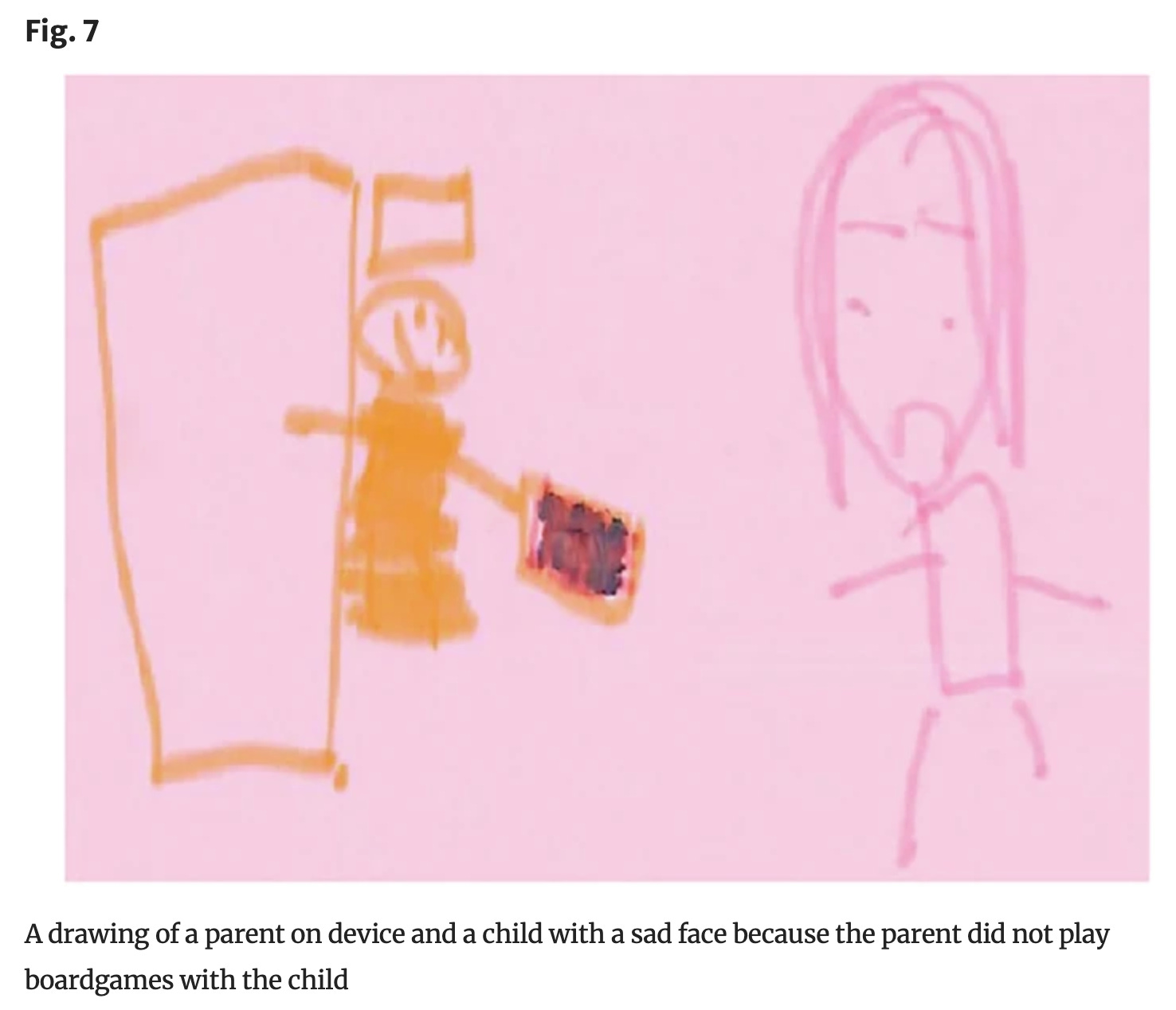
My take: This article is not meant to create guilt or sadness—though, admittedly, I experienced both while reading it. Mostly, I found it useful as a reminder that kids are more aware than we often realize, and that there are probably times when they (and I) would benefit from putting down my phone. Also a reminder to try including more children’s drawings in my academic research papers. Jour Child Fam Studies.
2. Is ChatGPT rotting our brains?
This one’s been making the rounds in the media—so much so that, in an unexpected turn of events, my husband texted me about it (“For your research roundup?”) at the exact same time I was writing this post.3
And it is a headline-maker! Case-in-point:
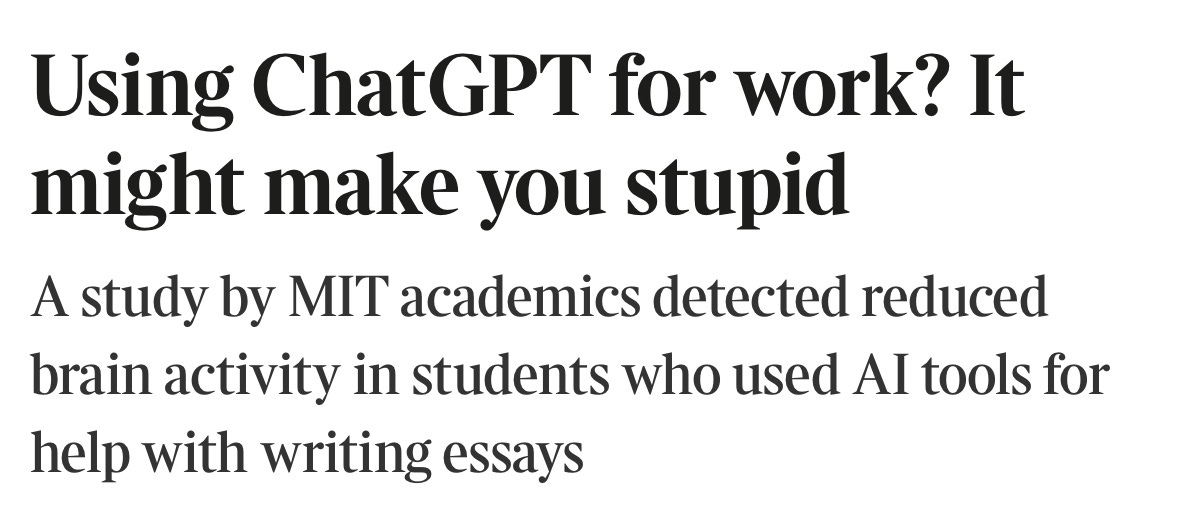
The authors seem to have planned for the possibility of this media coverage, given their creation of a dedicated website for the paper with
...This excerpt is provided for preview purposes. Full article content is available on the original publication.