How the US Won Back Chip Manufacturing
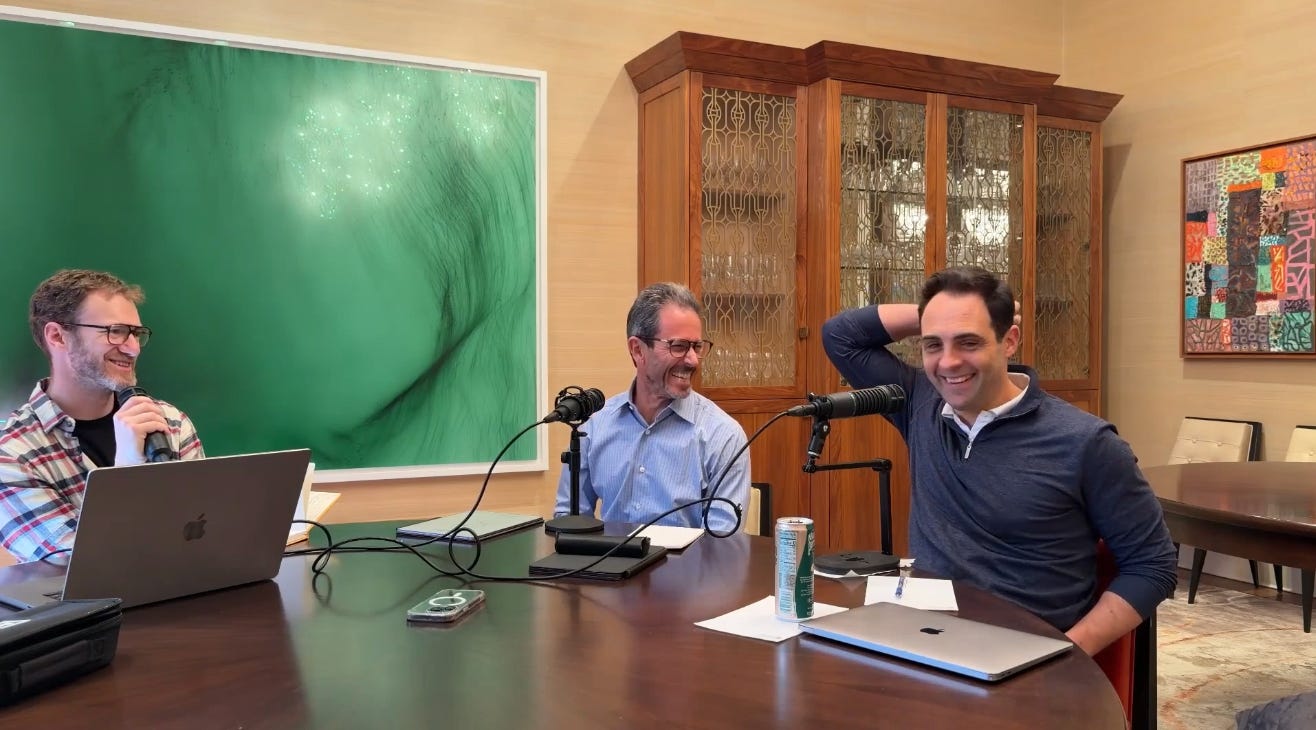
We’re here for a CHIPS Act megapod, in person with Mike Schmidt and Todd Fisher, the director and founding CIO of the CHIPS Program Office, respectively.
We discuss…
The mechanisms behind the success of the CHIPS Act,
What CHIPS can teach us about other industrial policy challenges, like APIs and rare earths,
What it takes to build a successful industrial policy implementation team,
How the fear of “another Solyndra” is holding back US industrial policy,
Chris Miller’s recent interest in revitalizing America’s chemical industry.
Listen now on your favorite podcast app.
This post is a collaboration with the Factory Settings Substack. Subscribe for more insights from former CHIPS Program Office leaders!
Was the Fab Boom Inevitable?
Jordan Schneider: We’re about a year out now. There was a long arc of Congress and two administrations imagining what the CHIPS Act could be, and now we’re sitting here in the first quarter of 2026 with fabs popping up everywhere — the biggest semiconductor buildout in memory. Everyone in the world wants more chips and more manufacturing capacity, and a decent percentage of that is now coming online in the US. That wasn’t necessarily baked in. Looking back, how do you give credit to the incentives versus the macro trends that would have led to some version of this buildout regardless?
Todd Fisher: It was definitely not baked in. If you go back to when the CHIPS Act passed in August 2022, ChatGPT hadn’t even launched until November of that year. The concept that AI would drive this massive demand cycle was not part of the original calculus — that became clearer as the years went on. At the time, we were projecting a trillion-dollar semiconductor industry perhaps by 2030. Now, that trillion-dollar milestone is going to be hit this year. The demand cycle was not anticipated.
What we did accomplish is acceleration. It’s hard to shift an entire business from outside the US into the US along with all of its supply chains. That takes time, effort, talent development, and construction. The building that’s happened — what we incentivized — has enabled a more rapid participation across the industry.
Mike Schmidt: A massive buildout of fab capacity to meet the moment on AI around the world was inevitable once the AI boom really took off. CHIPS was ultimately about where those fabs would get built and whether we could get
...This excerpt is provided for preview purposes. Full article content is available on the original publication.