I Don't Know
Deep Dives
Explore related topics with these Wikipedia articles, rewritten for enjoyable reading:
-
Milgram experiment
14 min read
Directly referenced in the article as a famous demonstration of authority bias - readers would benefit from understanding the full experimental design, ethical controversies, and implications for human obedience
-
Motivated reasoning
12 min read
A core concept in the article explaining why intelligent people often double-down on beliefs rather than admitting uncertainty - understanding the psychological mechanisms would deepen comprehension
-
Salomon Brothers
13 min read
The author's formative professional experience at this legendary Wall Street firm shaped his understanding of intellectual humility - readers would find the firm's colorful history and culture illuminating
This post is adapted from last week’s Frankly video titled “The Three Most Important Words We’re Taught Not to Say.” In the future, we’ll be adapting more Frankly videos to written versions and continuing to post them on Substack, so stay tuned for more.
As a podcast host, there’s one answer that I love to hear when I ask my guests a question – but I rarely ever do:
I don’t know.
To me, this answer is a signal of maturity, nuance, and honesty. It’s not trying to give an answer to all the world’s problems.
So, why is hearing “I don’t know” so rare?
We are all members of a social species embedded in a modern culture that’s been turbocharged by energy surplus and social technology. But in this modern setting we still seek status and respect as a product of our evolutionary wiring. Because of this, in most public settings, especially in the media, we overvalue confidence, bravado, and certainty. Today, saying “I don’t know” is seen as a sign of weakness, not of wisdom.
But in a world increasingly defined by ideological debates, when you hear these words today, they act as a sort of antidote to our cultural consensus trance. Admitting uncertainty makes room for discourse and the possibility of different answers.
In fact, I’m beginning to think that the reluctance to express “I don’t know” (or its equivalent) out loud is a fatal flaw in our culture as we begin to discuss our vastly complex, risky, and rapidly approaching future – which is chock full of uncertainties.
The Right Answer on Wall Street
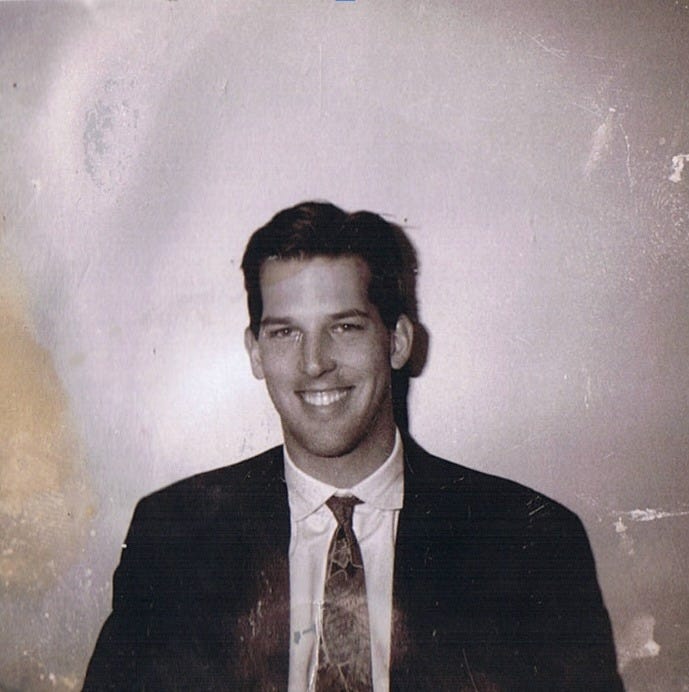
So back in the day, over 30 years ago, I started working at Salomon Brothers, which at the time was one of the coolest places on Wall Street. Their highly respected training program kicked our asses, and one of the key things I remember is that they would ask a series of questions, starting with something simple that you learn in business school like, “What’s the duration of a 30 year note?” Next, they would ask a slightly harder question: “What’s the ticker symbol of Yahoo?” Easy!: YHOO.
And then, after you answered the first two questions, they would ask you a really hard question that you weren’t supposed to be able to answer. Since we want to impress our bosses, we would inevitably
...This excerpt is provided for preview purposes. Full article content is available on the original publication.