OFAC’s Banality of Evil: Small US Agency Victimizes Millions of Foreign Innocents
Deep Dives
Explore related topics with these Wikipedia articles, rewritten for enjoyable reading:
-
Hannah Arendt
12 min read
The article centers on Arendt's concept of 'the banality of evil' but readers may not know her full intellectual biography - her escape from Nazi Germany, her controversial relationship with Heidegger, her broader political philosophy, and why her Eichmann analysis remains so contested among historians and philosophers.
-
International sanctions against Iraq
13 min read
The article references the 1990s economic warfare against Iraq and specifically mentions water pumps and chlorine restrictions. The full Wikipedia article details the comprehensive sanctions regime, the humanitarian catastrophe it caused, the 'oil-for-food' program, and the ongoing scholarly debate about civilian death tolls.
-
International Emergency Economic Powers Act
11 min read
The article briefly mentions this 1977 act as the legal foundation for presidential sanctions power. Readers would benefit from understanding its Cold War origins, how it expanded executive power, its relationship to the Trading with the Enemy Act, and the legal debates about its constitutionality.
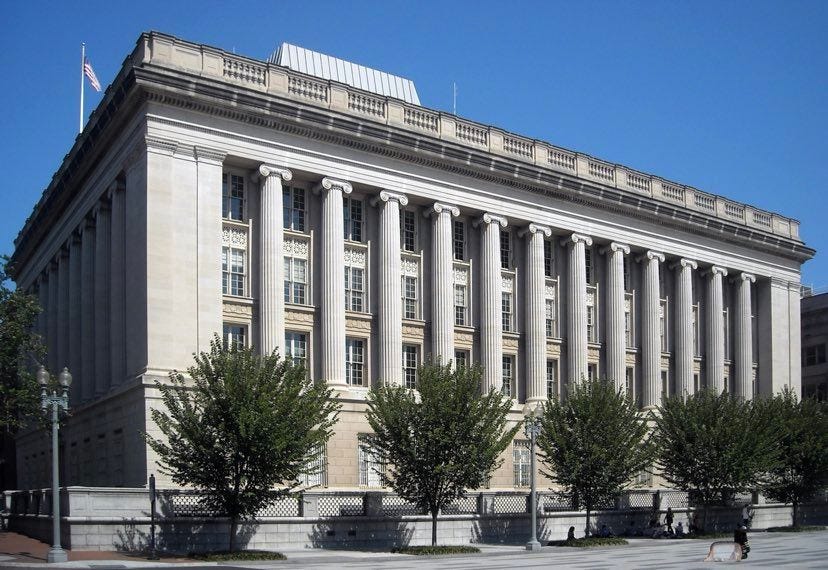
As tourists complete their strolls to the White House from the east along Pennsylvania Avenue, they pass a relatively unremarkable, columned office building that overlooks Lafayette Square — oblivious that, behind its walls, bureaucrats are quietly inflicting poverty, illness and death on innumerable innocents around the world.
The Freedman’s Bank Building doesn’t house CIA or Department of Defense officials, but rather the US Treasury’s little-known Office of Foreign Assets Control (OFAC). Instead of orchestrating airstrikes or insurgencies, these bureaucrats impose mass suffering via economic warfare, collectively serving as the tip of the spear that is America’s ever-expanding economic sanctions regime.
The term “banality of evil” was coined by intellectual Hannah Arendt after she observed the 1961 trial of Adolf Eichmann, the Nazi official who, from his post atop the inscrutably-named Office IV B 4, oversaw the grim logistics of funneling Jews into German concentration camps.
Arendt said she was struck to find Eichmann “neither perverted nor sadistic,” but “terrifyingly normal.” Rather than a rabid ideologue or psychopathic antisemite, Arendt found herself observing a boring bureaucrat whose diligent performance of his assigned duties was largely motivated by a mere desire for career advancement. “The deeds were monstrous, but the doer – at least the very effective one now on trial – was quite ordinary, commonplace, and neither demonic nor monstrous,” Arendt later wrote.
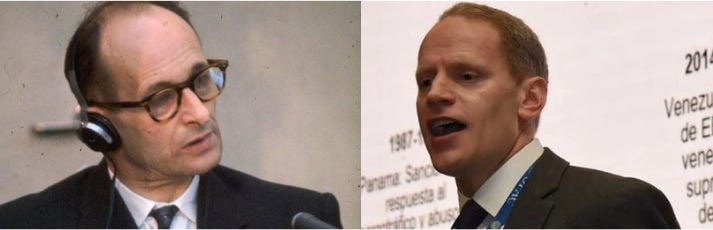
Arendt’s characterization sparked great controversy. In subsequent decades, some historians have challenged her assessment of Eichmann, and philosophers have wrestled with her proposition that one can do evil without being evil.
Whatever the appropriateness of Arendt’s application of “the banality of evil” to Eichmann, it’s safe to say the individual employees of OFAC — mostly lawyers — similarly aren’t perceived by people around them as malevolent. If you live in the vicinity of the capital, an OFAC worker might be the congenial coach of your child’s soccer team or a friendly face at a volunteer event.
However, regardless of their personalities and sincere convictions that they’re engaged in public service, the stark reality is that many OFAC employees spend their workdays carrying out the mass victimization of people who’ve done no harm to the United States or its citizens. To paraphrase Arendt,
...This excerpt is provided for preview purposes. Full article content is available on the original publication.