Can Economics Explain the Rise and Fall of the British Aristocracy?
In the modern world, especially in places like the United States, we tend to look unfavorably on aristocracy. Dukes, earls, barons, knights? These are just terms from a bygone era. In fact, Americans often mock their European cousins for carrying on with these titles. Sir Paul McCartney? How silly.
Nonetheless, readers of Economic Forces have no doubt realized at this point that I like to write about two things: (a) how economics can help us to understand the world, and (b) why particular institutions persist. This makes it much harder for me to mock aristocracy. The British aristocracy, for example, lasted a very long time. Sure, the modern aristocracy in the United Kingdom is mostly just symbolic and status-based. However, this wasn’t always the case. At one time, the aristocracy served in important public service roles. In fact, the pre-modern aristocracy lasted for over 300 years. During those 300 years of public service, England experienced many successes including its rise as a global power, the acquisition of a massive empire, the Industrial Revolution, and the moderation of monarchical power. One might therefore wonder what role, if any, the aristocracy played in that process.
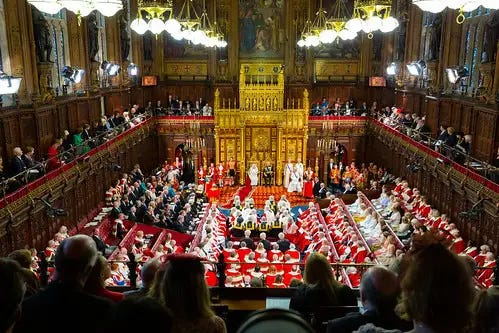
Regardless of whether the aristocracy played any role in those broad changes, the fact that the pre-modern aristocracy survived for 300 years calls out for explanation. What purpose did the aristocracy serve? Why did it persist? What lesson(s) can economics teach us about the existence and persistence of the aristocracy during this period? Fortunately, Doug Allen has attempted to use economics to explain the pre-modern aristocracy. His argument will be the subject of this week’s newsletter.
The Aristocracy: Some Background
Allen’s argument is focused on the pre-modern British aristocracy. This is the aristocracy from approximately 1550 - 1880. When people write about this period, and the aristocracy in particular, they often describe this as a period of corruption. The use of the word corruption is largely the result of comparisons with modern notions of meritocracy. The role of the aristocrats in public service came not from their superior abilities or talents, but rather through patronage, heredity, or outright purchases of a position. When combined with their lavish lifestyles for the period, it is not hard to understand why the modern eye might view the aristocracy quite unfavorably.
But if the aristocracy was this reprehensible and corrupt, why did it last so long? It is even more challenging
...This excerpt is provided for preview purposes. Full article content is available on the original publication.