MIPS
Readers may have noticed a famous and distinguished name in computer architecture in the news recently:
GlobalFoundries to Acquire MIPS to Accelerate AI and Compute Capabilities
July 8, 2025
GlobalFoundries (Nasdaq: GFS) (GF) today announced a definitive agreement to acquire MIPS, a leading supplier of AI and processor IP.
“MIPS brings a strong heritage of delivering efficient, scalable compute IP tailored for performance-critical applications, which strategically aligns with the evolving demands of AI platforms across diverse markets,” said Niels Anderskouv, president and chief operating officer at GlobalFoundries.
The MIPS here, though, is MIPS (the company), not MIPS (the CPU architecture). Because what MIPS (the company) doesn’t bring to GlobalFoundries is MIPS (the architecture), as MIPS (the company) abandoned MIPS (the architecture) back in 2021, switching instead to RISC-V as EE Journal reported:
What a long, strange trip it’s been. MIPS Technologies no longer designs MIPS processors. Instead, it’s joined the RISC-V camp, abandoning its eponymous architecture for one that has strong historical and technical ties. The move apparently heralds the end of the road for MIPS as a CPU family, and a further (slight) diminution in the variety of processors available. It’s the final arc of an architecture … The new MIPS is MIPS in name only.
MIPS (the architecture) hasn’t completely disappeared (more on that later) but it’s downward trajectory is now steep.
MIPS (the architecture) was once a leading RISC architecture that, over multiple decades, powered hundreds of important designs ranging from high performance graphics workstations to internet routers to satellites. Billions of MIPS powered devices were shipped over more than three decades.
With all this success, how did MIPS (the architecture) come to fail?
Let’s start our investigation by going back to close to the peak of MIPS ‘glory days’ and a famous Italian plumber and his quest to capture a yellow rabbit …
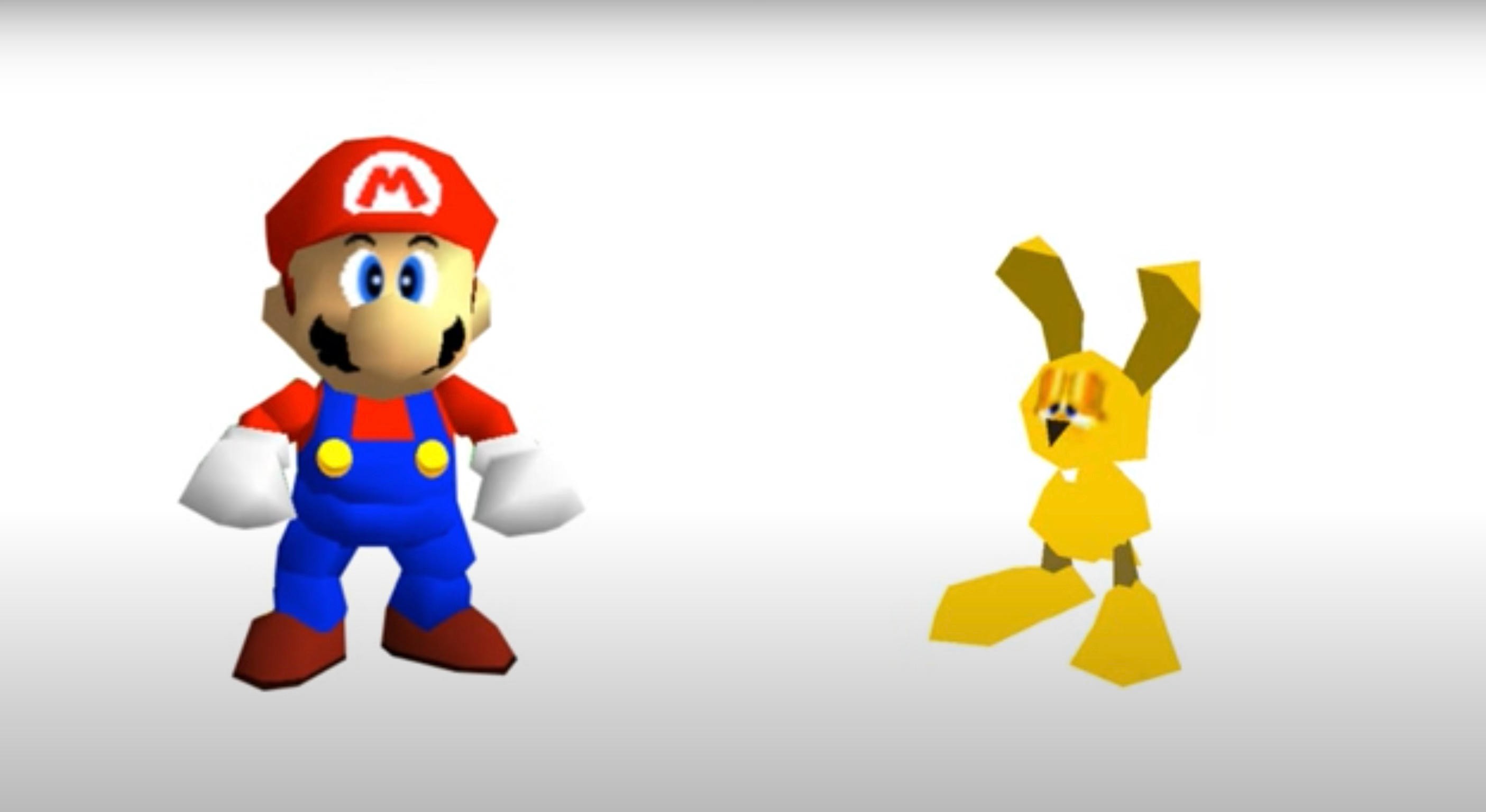
In Super Mario 64, Nintendo’s hugely influential and popular 1996 game, a crudely rendered yellow rabbit makes a hyperactive but fleeting appearance. Locked in Princess Peaches’s basement, the rabbit allows the game’s eponymous plumber to gain two ‘power stars’. It then disappears, never to be seen again in this game, or any of its numerous successors.
The name of the yellow rabbit: MIPS
MIPS (the rabbit) was one of the first characters created by Super Mario 64’s designers and was used extensively for testing in the game’s early development.
Super
...This excerpt is provided for preview purposes. Full article content is available on the original publication.