Wine is Food 🍷
My best friend, Bodhi, is multi-talented and excels at nearly everything he does. Like many of us, he started working in restaurants when he was young and stayed with it - successfully sidestepping the pull of a corporate job. More than a decade ago, he trained as a sommelier, though for years it was just one piece of who he was, rarely something he led with. But when Bodhi turns his attention to something, it’s never surface-level. He has a way of going deep, picking up in a few years what might take someone else a lifetime to learn.
That’s exactly what happened when he launched his newsletter, Thirst Behavior. He describes it as “a weekly column about wine and the performance of taste… the social agenda for people who care not only about what’s in their glass but about how taste itself gets made.”
When we first met, Bodhi and I used to joke that we didn’t have much in common. I was a glitter-loving Jersey jam-band kid, and he was a Waldorf-raised musician from Austin. But over the years, our worlds have overlapped more and more. Food and agriculture have always been a shared thread, and wine, of course, is food. It’s made from grapes, rooted in soil, and shaped by climate. I’ve always envied that wine has the word terroir, a whole language to describe how land and soil shape flavor, while in food, those connections are rarely acknowledged.
That’s why I asked Bodhi if he’d answer a few questions for this newsletter. Not just about wine itself, but about the agricultural side of winemaking, sustainability, and what it means to be a more thoughtful drinker. If you care about what you eat, you’ll get a lot from how he thinks about what we drink.
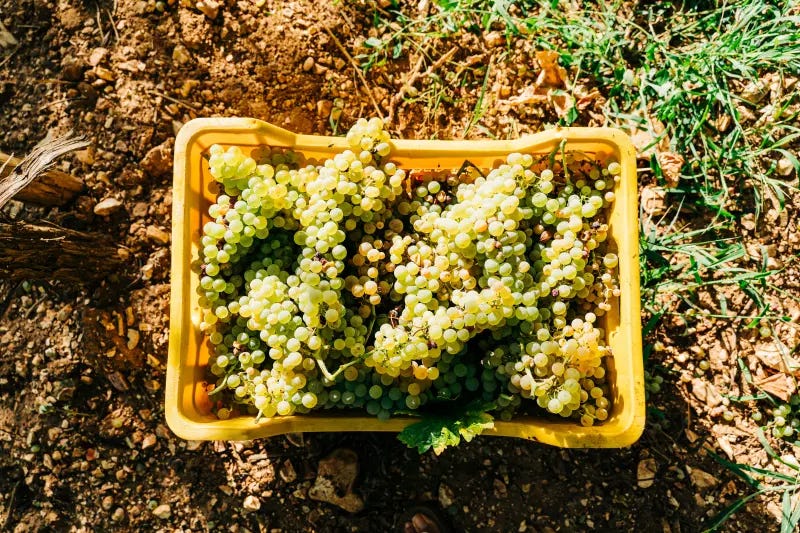
How do you think about wine as an agricultural product? For those who are unfamiliar, could you explain how different farming methods affect flavor or quality?
Wine is farming before it’s anything else. The wine in your glass is basically a time capsule of one growing season in one place, filtered through the winemaker’s decisions. If you farm with herbicides and chemical fertilizers, you’re hollowing out the ecosystem that lets vines express themselves in their most precise character. Healthy soils grow healthier fruit, and healthier fruit means you don’t have to “fix” as much in the cellar. It’s the difference
...This excerpt is provided for preview purposes. Full article content is available on the original publication.