Shock. Horror. Tragedy.
Deep Dives
Explore related topics with these Wikipedia articles, rewritten for enjoyable reading:
-
Sandy Hook Elementary School shooting
13 min read
The article explicitly references Sandy Hook as a turning point after which victims' families were targeted by conspiracy theories, fundamentally changing how survivors and families engage with media coverage of mass shootings
-
The Second Coming (poem)
10 min read
William Kristol directly quotes Yeats' poem 'The Second Coming' to frame his commentary on the violence, and understanding the poem's historical context (written after WWI and the Irish War of Independence) adds depth to its application here
-
History of the Jews in Australia
14 min read
The article discusses the Hanukkah attack in Sydney and mentions an 87-year-old Ukrainian Holocaust survivor in the Australian Jewish community; understanding this community's history provides important context for why this attack resonates globally
It was a weekend of horrible news, with appalling outbreaks of violence both here in America and abroad. We’re praying for all those affected by the attacks at Brown University and on the Jewish community in Australia. It’s not a happy Monday.
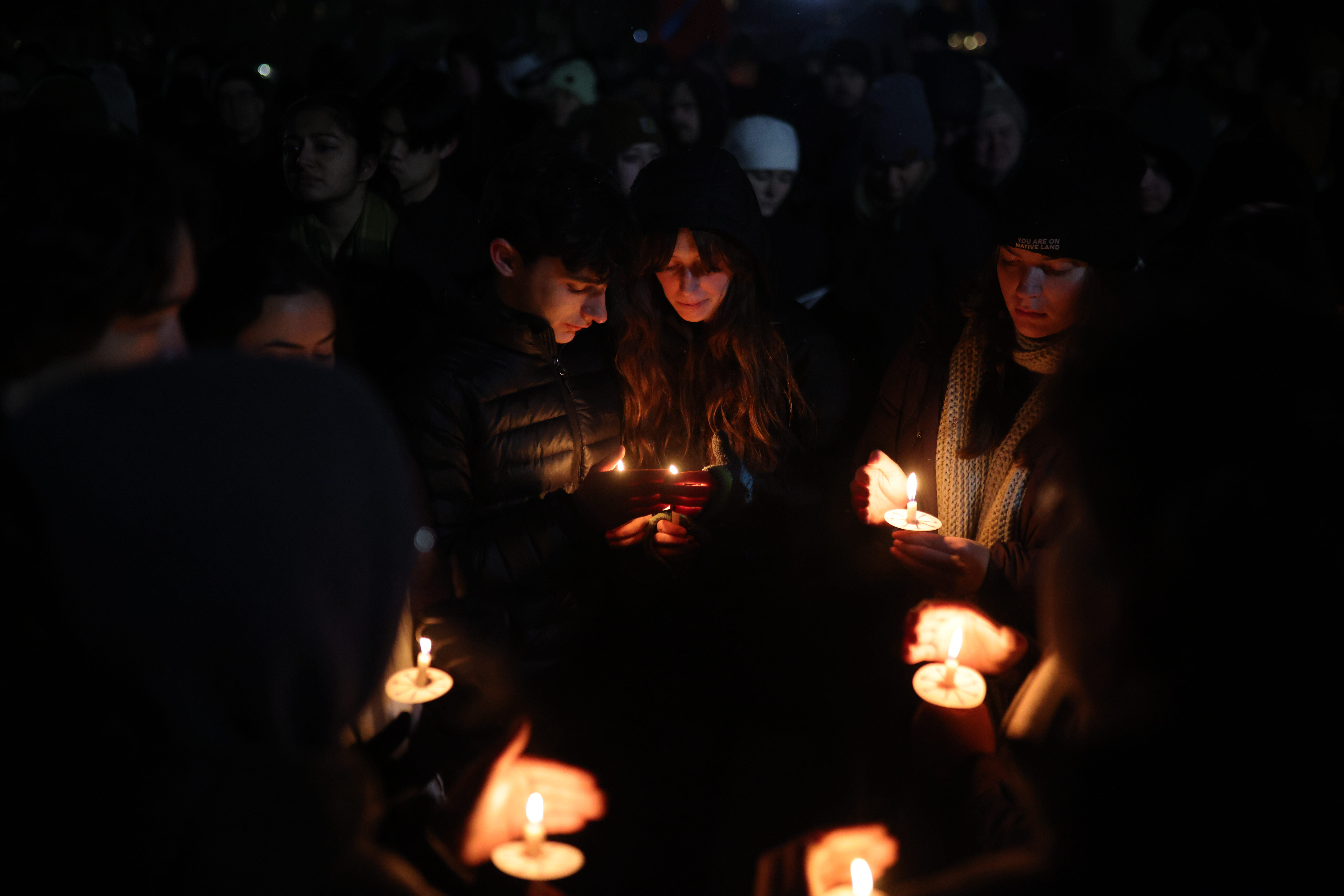
Numbness in Providence
by Hannah Yoest
PROVIDENCE, RHODE ISLAND—The doors are not the problem. In the aftermath of the mass school shooting at Brown University on Saturday, in which two died and nine were injured, many have started to call for the school to follow Columbia and Yale in completely locking down and gating the campus. This willful avoidance of the real issue says a lot about how we deal with these tragedies. The continued failure to address gun violence has engendered learned helplessness. We treat the Second Amendment—and a questionably broad reading of it—like an immutable commandment rather than a matter of policy.
The Rhode Island School of Design, where I’m a graduate student, shares much of Brown’s campus. The security measures in place are already extensive. Most buildings require you to swipe an access badge to get through multiple locked doors.
In a press conference Sunday morning at the local fire station, one reporter mentioned the two Brown students who were already survivors of a mass shooting from their time in high school. She pressed Providence Mayor Brett Smiley, “What do you feel needs to be done to keep this from happening, to stop that cycle of violence?”
Smiley declined to address her concern directly, admonishing her that, so soon after the murders, the time for advocacy was not yet right. But he recalled what one student in the hospital who “showed tremendous courage” told him: ”You know that active-shooter drill they made me do in high school actually helped me in the moment.”
That observation, Smiley said, “provided me hope, and was so sad. We shouldn’t have to do active-shooter drills, but it helped, and the reason it helped and the reason we do these drills is because [mass shootings are] damn frequent.”
Active-shooter drills are a way of hardening our softest targets. They’re also a way of hardening our hearts, accepting that to be a student in America is to be a victim-in-waiting.
After so many years and so many young deaths, it’s not hard
...This excerpt is provided for preview purposes. Full article content is available on the original publication.