Our Overfitted Century
Deep Dives
Explore related topics with these Wikipedia articles, rewritten for enjoyable reading:
-
Overfitting
12 min read
The central metaphor of the article - 'overfitting' from machine learning is used to explain cultural stagnation. Understanding the technical concept deeply enriches the author's argument about how culture optimizes for past success patterns rather than generating novelty.
-
Copyright term
13 min read
The article cites Chris Dalla Riva's argument that overly long intellectual property rights contribute to cultural stagnation by incentivizing exploitation over creation. Understanding the history and expansion of copyright terms provides essential context for this debate.
-
Dream
12 min read
The author mentions his 'Overfitted Brain Hypothesis' which grounds cultural analysis in the neuroscience of dreaming and learning. Understanding scientific theories about why we dream provides context for his proposed connection between biological and cultural creativity.
“Culture is stuck? I’ve heard this one before.”
You haven’t heard this one, but I see why you’d think that.
There’s no better marker of culture’s unoriginality than everyone talking about culture’s unoriginality.
In fact, I don’t fully trust this opening to be original at this point!
Yes, this is technically one of many articles of late (and for years now) speculating about if, and why, our culture has stagnated. As The New Republic phrased it:
Grousing about the state of culture… has become something of a specialty in recent years for the nation’s critics.
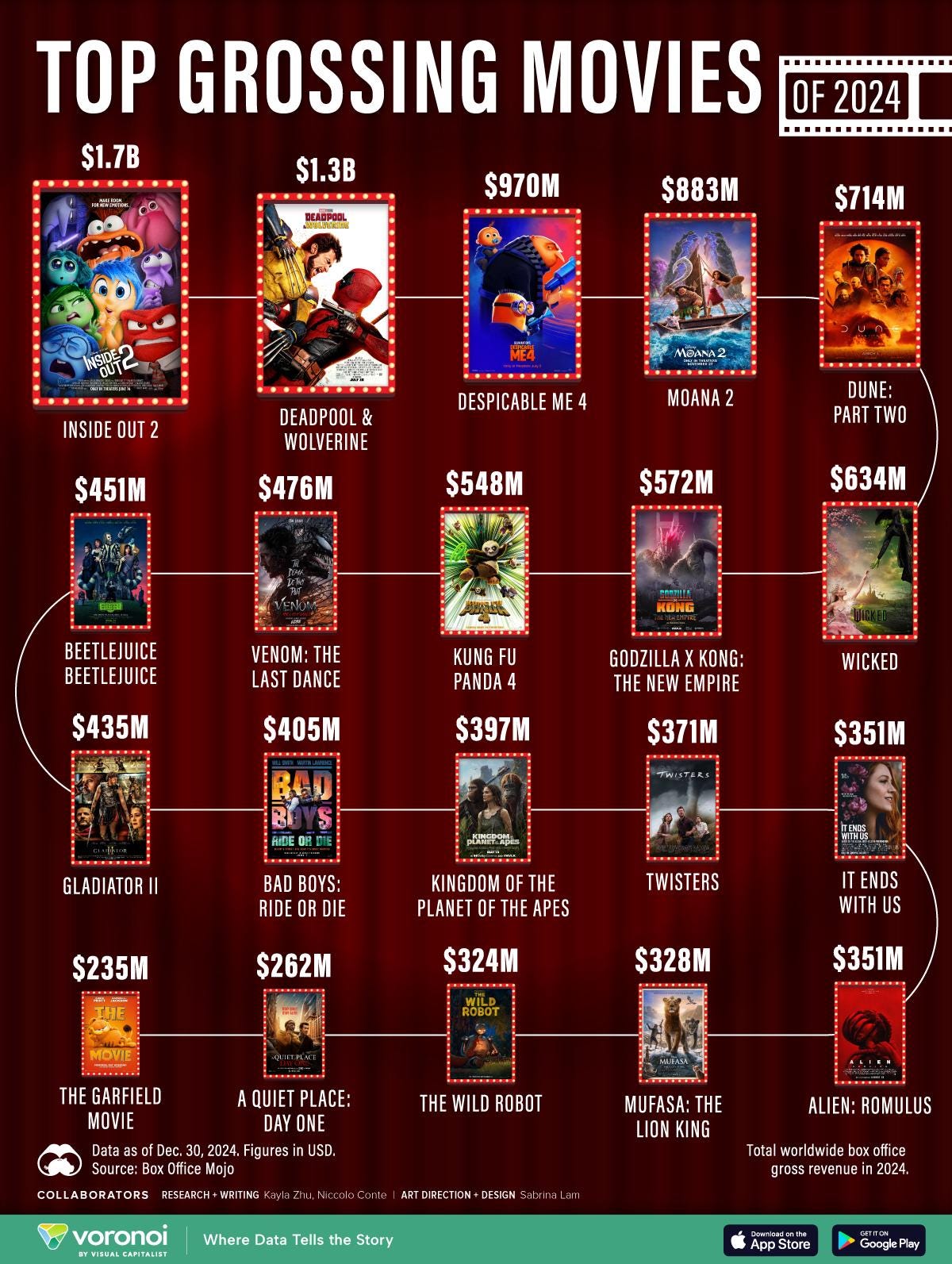
But even the author of that quote thinks there’s a real problem underneath all the grousing. Certainly, anyone who’s shown up at a movie theater in the last decade is tired of the sequels and prequels and remakes and spinoffs.
My favorite recent piece on our cultural stagnation is Adam Mastroianni’s “The Decline of Deviance.” Mastroianni points out that complaints about cultural stagnation (despite already feeling old and worn) are actually pretty new:
I’ve spent a long time studying people’s complaints from the past, and while I’ve seen plenty of gripes about how culture has become stupid, I haven’t seen many people complaining that it’s become stagnant. In fact, you can find lots of people in the past worrying that there’s too much new stuff.
He hypothesizes cultural stagnation is driven by a decline of deviancy:
[People are] also less likely to smoke, have sex, or get in a fight, less likely to abuse painkillers, and less likely to do meth, ecstasy, hallucinogens, inhalants, and heroin. (Don’t kids vape now instead of smoking? No: vaping also declined from 2015 to 2023.) Weed peaked in the late 90s, when almost 50% of high schoolers reported that they had toked up at least once. Now that number is down to 30%. Kids these days are even more likely to use their seatbelts.
Mastroianni’s explanation is that the weirdos and freaks who actually move culture forward with new music and books and movies and genres of art have disappeared, potentially because life is just so comfortable and high-quality now that it nudges people against risk-taking.
Meanwhile, Chris Dalla Riva, writing at Slow Boring, says that (one major)
...This excerpt is provided for preview purposes. Full article content is available on the original publication.