Playing Catch Up
Deep Dives
Explore related topics with these Wikipedia articles, rewritten for enjoyable reading:
-
9M730 Burevestnik
1 min read
Linked in the article (9 min read)
-
Poseidon (unmanned underwater vehicle)
1 min read
Linked in the article (7 min read)
-
Rosatom
15 min read
The article extensively discusses Rosatom's dominance in global nuclear energy - its enrichment services, reactor construction worldwide, and continued supply of enriched uranium to the US despite sanctions. Understanding Rosatom's history, structure, and global reach provides essential context for the geopolitical nuclear competition described.
“In nuclear war, all men are cremated equal.” – Dexter Gordon
On October 21, Russian President Vladimir Putin announced the successful test of the nuclear-powered Burevestnik cruise missile. The Burevestnik—known to NATO as the SSC-X-9 Skyfall—maintains a range that Russia claims is virtually unlimited. There are no known defenses against the technology. According to the Russian military, the missile was airborne for 15 hours and flew 8,700 miles during the test.
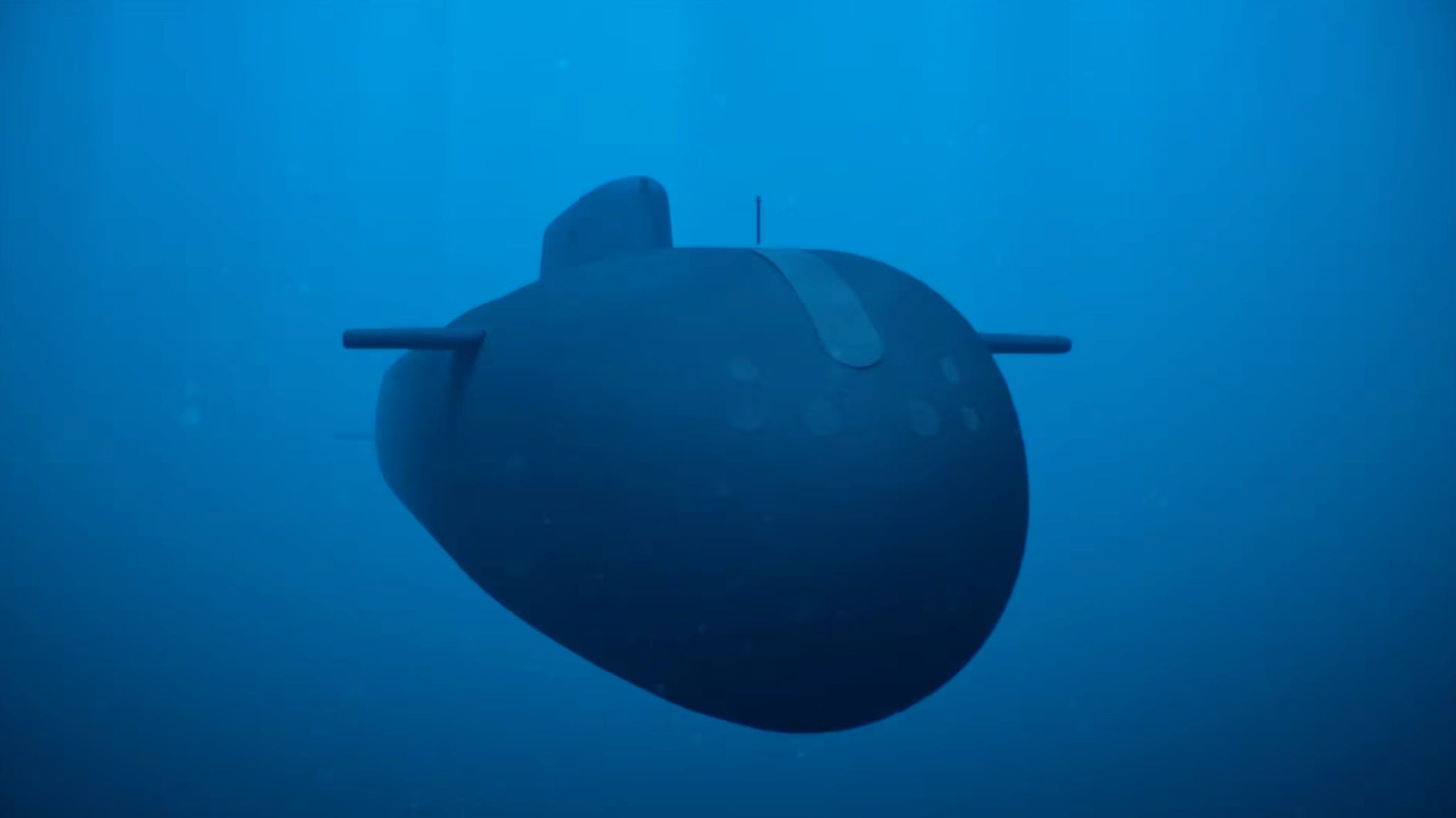
Days later, Putin revealed that Russia had successfully tested the nuclear-powered Poseidon torpedo, a 65-foot-long nuclear death machine capable of triggering massive and radioactive tsunamis toward coastlines all over the world. The Poseidon is allegedly able to operate autonomously at depths and speeds that make interception virtually impossible, assuring Russia of a devastating second-strike ability in the event it is caught off-guard by a preemptive nuclear attack.
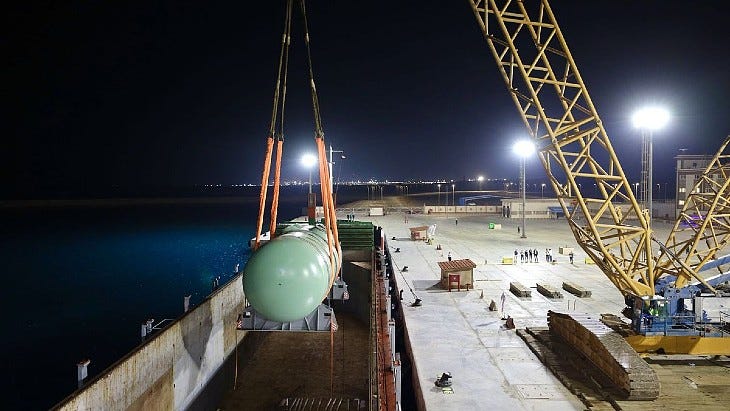
Whether you take these military claims at face value, there is no denying that Russia’s civilian nuclear energy sector is world-class. In addition to 36 reactors currently operating within Russia and seven more under construction, government-owned Rosatom has either built or is constructing dozens more in countries around the globe. On the same day that Russia announced the successful Burevestnik test, Rosatom delivered the reactor pressure vessel for the El-Dabaa nuclear power plant in Egypt, marking a major milestone for the high-profile project:
“El Dabaa will be Egypt’s first nuclear power plant, and the first in Africa since South Africa’s Koeberg was built nearly 40 years ago. The Rosatom-led project, about 320 kilometres north-west of Cairo, will comprise four VVER-1200 units, like those already in operation at the Leningrad and Novovoronezh nuclear power plants in Russia, and the Ostrovets plant in Belarus.
Under the 2017 contracts, Rosatom will not only build the plant, but will also supply Russian nuclear fuel for its entire life cycle, including building a storage facility and supplying containers for storing used nuclear fuel. It will also assist Egyptian partners in training personnel and plant maintenance for the first 10 years of its operation. Rosatom said last month that it is aiming for a future service life of 100 years for nuclear power plants.”
Rosatom is also the global leader in uranium enrichment services, holding a 36% worldwide share in that all-important market. The company’s advanced gas centrifuge technology is widely considered best-in-class. Its four major enrichment facilities
...This excerpt is provided for preview purposes. Full article content is available on the original publication.