My latest #ThoughtoftheDayonChina: : the flood of Chinese mainlanders settling in Hong Kong is remaking the city’s social tapestry but these newcomers don't want to turn it into a mainland clone.
Deep Dives
Explore related topics with these Wikipedia articles, rewritten for enjoyable reading:
-
One country, two systems
15 min read
The article's central tension—whether Hong Kong will become 'just another Chinese city'—directly relates to this constitutional principle governing Hong Kong's relationship with mainland China. Understanding the legal framework, its origins in the 1984 Sino-British Joint Declaration, and how it was intended to preserve Hong Kong's capitalist system and common law provides essential context for the institutional concerns the author raises.
Hong Kong is bouncing back, especially in finance, defying predictions of decline after the 2019 unrest and the 2020 national security law. The Hong Kong stock exchange has surged to the top of this year’s global rankings as the world’s largest initial public offering venue, with over 300 companies queuing up to list their shares.
This resurgence signals resilience, but it also ignites a deeper debate: what kind of Hong Kong is emerging?
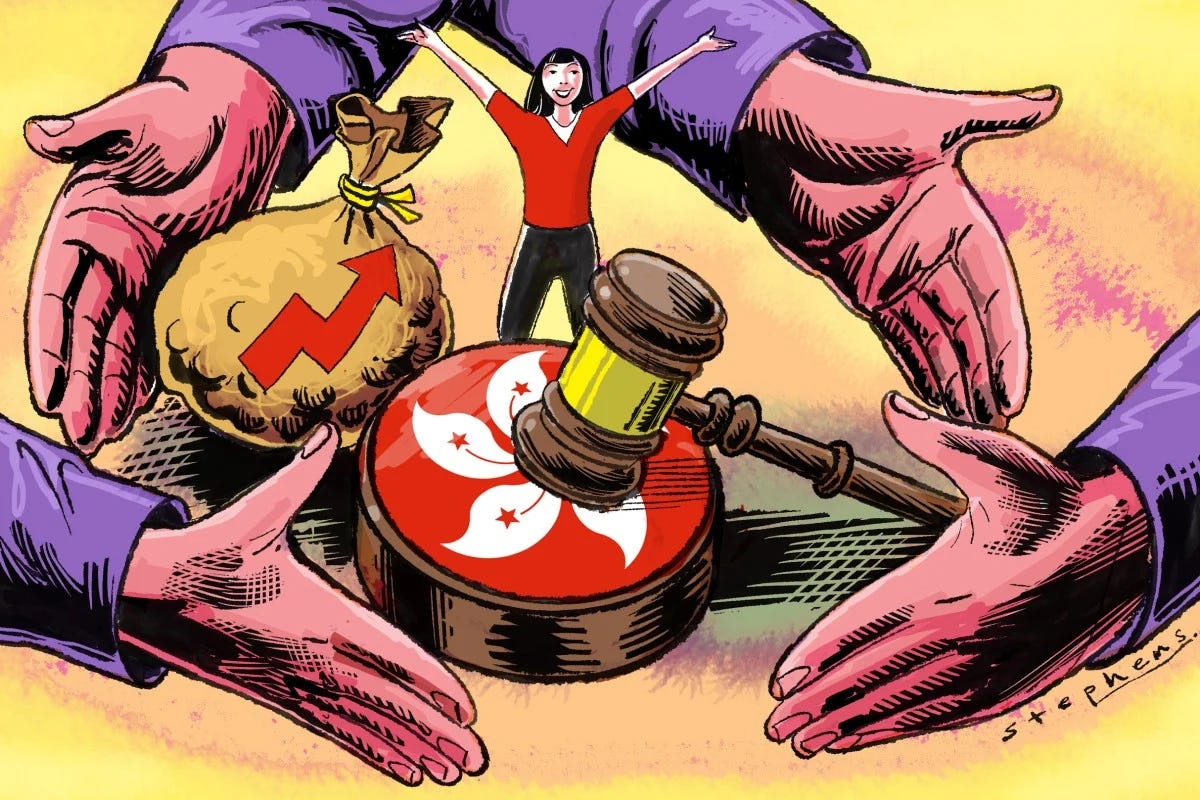
Concern has swirled around the recent influx of mainland Chinese and whether their arrival will erode the city’s social fabric, hastening its slide into “just another Chinese city”. These worries surfaced vividly in my conversations with academics who hail from the mainland and foreign journalists revisiting after years away.
Such concerns, while understandable, are misplaced. The catalyst for this unease lies in the government’s post-2020 talent schemes to address the exodus of locals and foreign residents.
Since 2022, the government’s talent schemes have drawn extraordinary interest, as evidenced by the half a million applications, more than 330,000 approvals and over 220,000 arrivals, mostly from the mainland.
The impact is impossible to miss. Stroll through the financial centre of Central, and the crisp cadence of Mandarin arguably rivals Cantonese as the lingua franca, spilling beyond tourist traps into boardrooms and back alleys.
This wave is reshaping everyday life in subtle but seismic ways. As Hong Kong’s retail and dining sectors reel from pandemic scars, mainland chains are seemingly replacing the cha chaan teng of yore. Boutiques hawk mainland liquor like Mao-tai.
Even the roads hum with change: Chinese electric vehicles, from sleek Maxus vans to luxurious Zeekrs, are supplanting status symbols like the Toyota Alphard, offering comparable luxury and comfort at lower prices.
Some read these changes as omens: will more Mandarin, more mainland brands and more “mainland-style” habits accelerate Hong Kong’s transformation into “just another Chinese city”?
Even small anecdotes become touchpoints, particularly among mainlanders who arrived decades ago and have long woven themselves into the city’s tapestry.
At a recent gathering, an academic from the mainland and a veteran of American and Hong Kong academia lamented what they perceived as a surge of impatient drivers, though it’s unclear if this stems from new arrivals or contagious frustration among locals.
Historically, Hong Kong has always grown through migration from the mainland. Waves of Cantonese-speaking farmers and fishermen from Guangdong province and well-capitalised entrepreneurs from Shanghai and Zhejiang
This excerpt is provided for preview purposes. Full article content is available on the original publication.